Understanding MCP: Model Context Protocol
Understanding MCP: Model Context Protocol
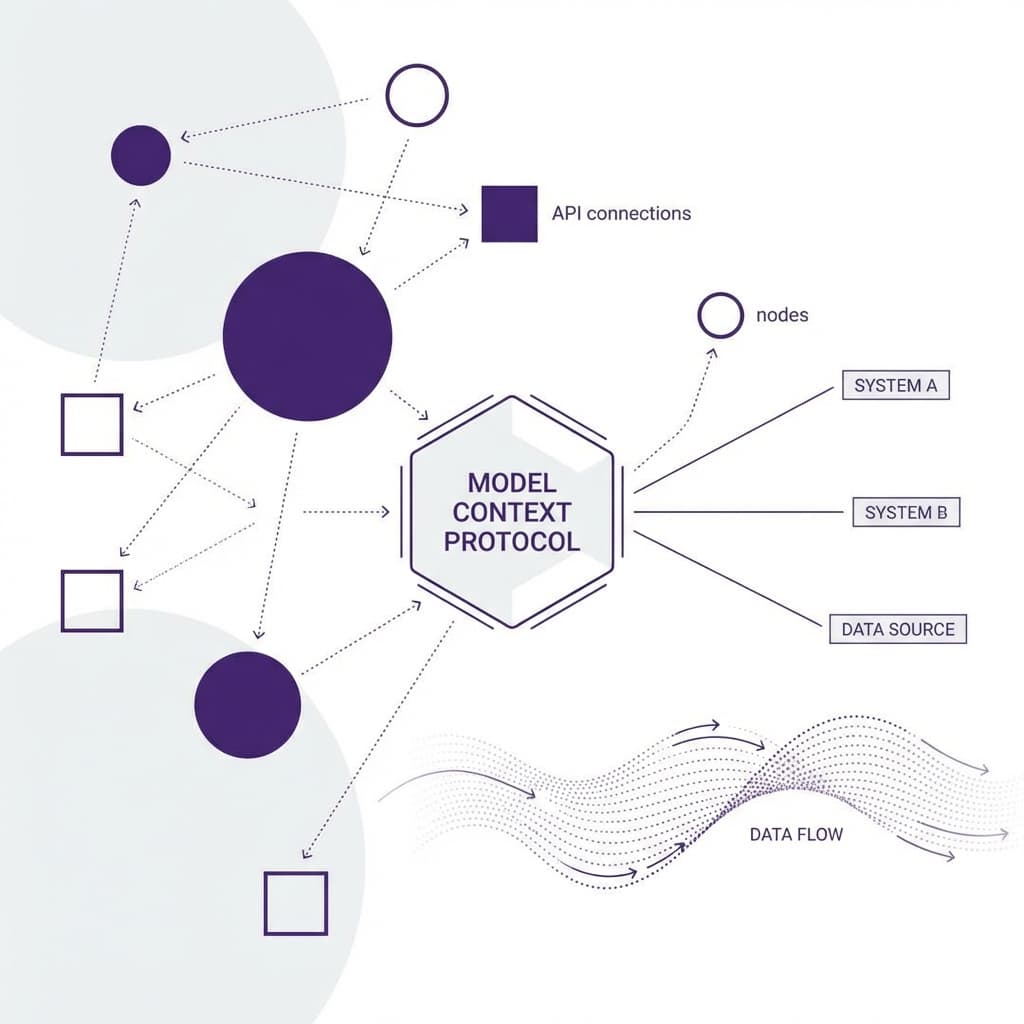
The Model Context Protocol (MCP) is an open standard that defines how AI models communicate with external tools, data sources, and services. It's becoming the backbone of AI agent architectures.
Why MCP Matters
Before MCP, every AI application had to implement its own custom integrations. This led to:
- Duplicated effort across projects
- Inconsistent interfaces
- Security vulnerabilities
- Maintenance nightmares
MCP solves these problems by providing a standardized protocol.
Core Concepts
Resources
Resources represent data that the AI can read. They're identified by URIs and can include:
- Files and documents
- Database records
- API responses
- Live data streams
Tools
Tools are functions that the AI can invoke to perform actions:
- Executing code
- Sending emails
- Querying databases
- Making API calls
Prompts
Prompts are reusable templates that help structure AI interactions for specific use cases.
How MCP Works
- Server: Exposes resources and tools via the MCP protocol
- Client: The AI model or agent that connects to MCP servers
- Transport: The communication layer (stdio, HTTP, WebSocket)
Example Architecture
┌─────────────┐     ┌─────────────┐     ┌─────────────┐
│   AI Model  │────▶│ MCP Client  │────▶│ MCP Server  │
└─────────────┘     └─────────────┘     └─────────────┘
                                              │
                                              ▼
                                        ┌─────────────┐
                                        │  Database,  │
                                        │  APIs, etc. │
                                        └─────────────┘
Benefits of MCP
- Standardization: One protocol to rule them all
- Security: Built-in permission and authentication models
- Discoverability: Servers can advertise their capabilities
- Composability: Multiple servers can work together
Getting Started
To use MCP in your projects:
- Choose an MCP server for your data source
- Configure your AI client to connect to the server
- Use the exposed resources and tools in your prompts
Conclusion
MCP is transforming how we build AI applications by providing a common language for AI-tool interaction. As the ecosystem grows, we can expect more pre-built servers and easier integration paths.