AI Agents: The Future of Automation
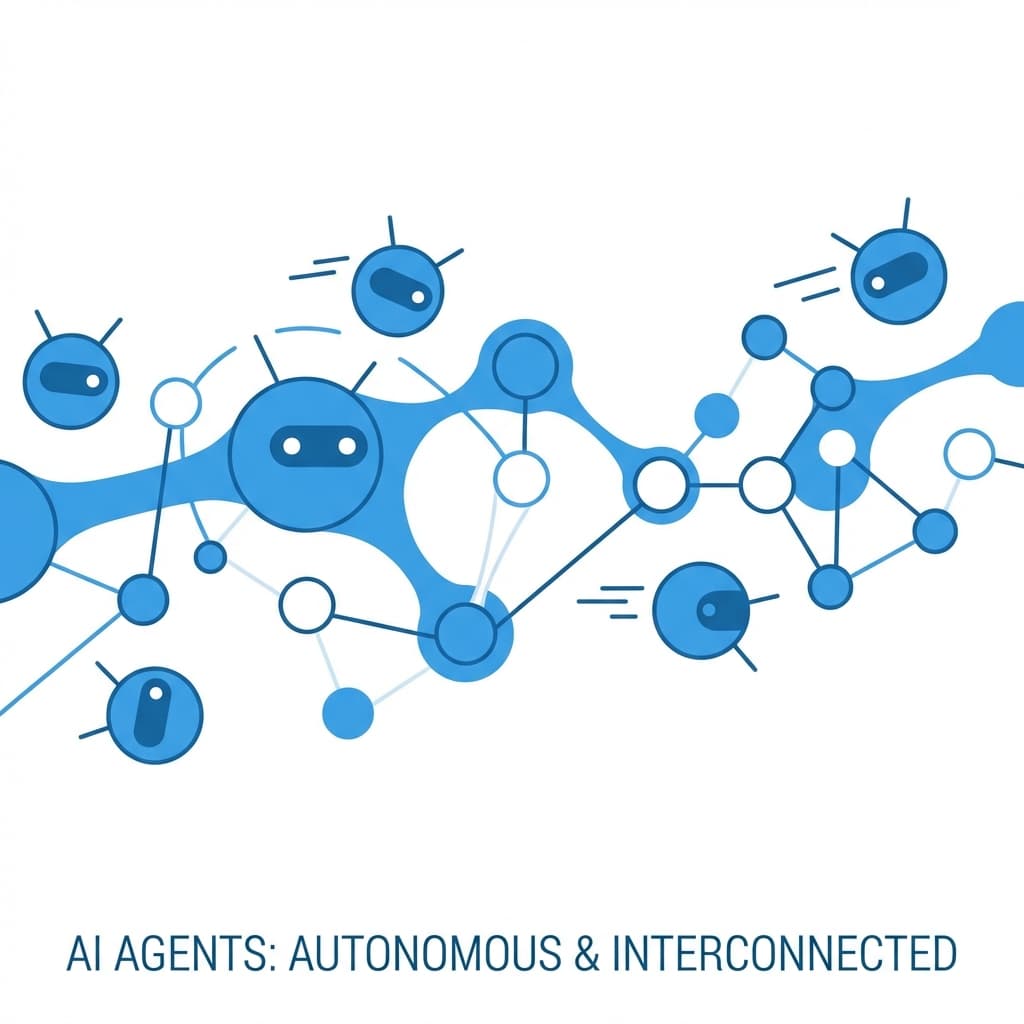
AI Agents: The Future of Automation
Artificial Intelligence agents represent a paradigm shift in how we think about automation. Unlike traditional software that follows rigid, pre-defined rules, AI agents can perceive their environment, make decisions, and take actions to achieve specific goals.
What Are AI Agents?
An AI agent is an autonomous system that:
- Perceives its environment through sensors or data inputs
- Reasons about the information it receives
- Acts upon the environment to achieve its objectives
- Learns from outcomes to improve future performance
Types of AI Agents
1. Simple Reflex Agents
These agents respond directly to the current percept, ignoring the rest of the percept history. They work well in fully observable environments.
2. Model-Based Agents
These maintain an internal state that depends on the percept history, allowing them to handle partially observable environments.
3. Goal-Based Agents
Beyond just reacting, these agents have goals they're trying to achieve, allowing for more flexible behavior.
4. Utility-Based Agents
These agents maximize a utility function, allowing them to make trade-offs between conflicting goals.
5. Learning Agents
The most sophisticated type, these agents can improve their performance over time through experience.
Real-World Applications
AI agents are already transforming industries:
- Customer Service: Chatbots that can handle complex queries and escalate appropriately
- Finance: Trading agents that analyze markets and execute trades
- Healthcare: Diagnostic agents that assist doctors in identifying conditions
- Manufacturing: Robotic agents that adapt to changing production requirements
The Future
As language models become more capable, we're seeing the emergence of LLM-powered agents that can:
- Browse the web and extract information
- Write and execute code
- Interact with APIs and databases
- Collaborate with humans on complex tasks
The key to successful AI agents lies in proper orchestration, clear goal definition, and robust safety measures.
Conclusion
AI agents represent the next frontier in automation. By combining perception, reasoning, and action, they can tackle problems that were previously impossible to automate. As the technology matures, we can expect to see agents playing an increasingly important role in our daily lives and work.